

XNO® ANODE MATERIAL
XNO® – purpose-built for industrial electrification
A decade of research started at the University of Cambridge produced a battery anode technology that does what no incumbent chemistry can: fast charging, extreme cycle life, wide temperature operation, and the highest safety — simultaneously, without compromise.

WHY XNO®
Different applications. Different requirements.
NMC and LFP address some requirements. LTO addresses others — but at the cost of energy density. XNO® was developed to deliver all of them simultaneously.

CHEMISTY COMPARISON TABLE: XNO® VS NMC/LFP VS LTO
WHY XNO®
Different applications. Different requirements.
NMC and LFP address some requirements. LTO addresses others — but at the cost of energy density. XNO® was developed to deliver all of them simultaneously.

CHARGING SPEED
6 min
Symmetric 10C continuous charge and discharge — not a peak capability, but a sustained one. Operational downtime from charging becomes negligible.
SAFETY RATING
EUCAR L3
No fire. No explosion. No thermal runaway — by design, not by thermal management. The safest commercially available Li-ion anode chemistry.
CYCLE LIFE CHART
CYCLE LIFE
>50,000
Predicted cycle life at high charge rates and real-world depth of discharge. Cells under test at 9,932 cycles showing 98.1% capacity retention.
OPERATING RANGE
−30/+60°C
Full charge and discharge capability across the entire range. No derating, no restricted windows. Built for industrial environments, not laboratory conditions.
LOW TEMP PERFORMANCE CHART
MATERIALS SCIENCE
Why XNO® performs the way it does
XNO® is a mixed niobium oxide belonging to a family known as Wadsley-Roth crystal structures. Their distinctive architecture creates an exceptionally stable network of lithium-ion diffusion pathways, combined with near-zero lattice strain during cycling — which is why XNO® lasts as long as it does.
Operating at approximately 1.6V vs Li/Li⁺, lithium plating is structurally eliminated. For the full materials science — crystal structure, electrochemistry, and physicochemical characterisation — read the whitepaper.
WADSLEY-ROTH STRUCTURE SCHEMATIC

FOR CELL MANUFACTURERS
A drop-in anode for standard manufacturing lines
No new equipment. No new processes. XNO® is compatible with NMP, aqueous, and dry extrusion electrode preparation. Stable to air, water, and heat — no controlled atmosphere required.
Works with standard current collectors, binders, separators, and electrolytes. Compatible cathode chemistries: NMC, LFP, NCA, LNMO. Full physicochemical specifications in the whitepaper.
Commercial supply: XNO® is manufactured at industrial scale through an established strategic production partnership, with dual-qualified sources for supply security. We supply globally and are experienced in meeting the requirements of volume production.
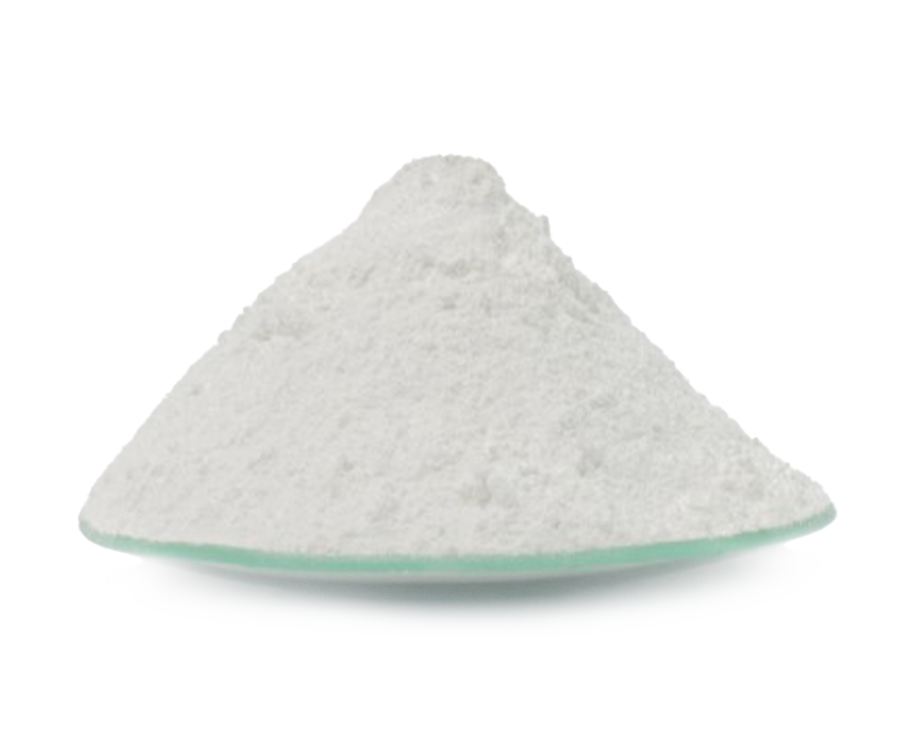

XNO® as the natural successor to LTO
For the industries where LTO has been the default choice — mining, rail, maritime, AGVs, data centres — XNO® represents a direct upgrade. Same safety. Same fast-charge capability. Same cold-temperature performance. Significantly higher energy and power density. Available in industry-standard cell and module formats designed for straightforward integration.
UPGRADE PATH
SUSTAINABILITY
A lower-carbon
battery technology
An independent LCA by Ghent University, peer-reviewed in the Journal of Sustainable Materials and Technologies, found XNO® has 51% lower GWP than LTO at the material level and 61% lower on an energy-delivery basis. Niobium is abundant, non-toxic, and recoverable at end of life.
IP & MATURITY
Proven technology.
Protected IP.
Active roadmap.
22 patent families · 46 internationally granted patents. Cell manufacturers and system integrators have full freedom to operate at cell, module, and pack level.
XNO® is in commercial production and deployed across mining, rail, maritime, commercial transport, and energy storage on multiple continents. The materials roadmap is active.

Ready to evaluate XNO®?
Download the full technical whitepaper or request material directly.